


Hey there! As a supplier of Acrylamide Crystal, I often get asked a bunch of questions about this chemical. One of the most common ones is, "Can acrylamide crystal form complexes with other compounds?" Well, let's dive right into it and find out.
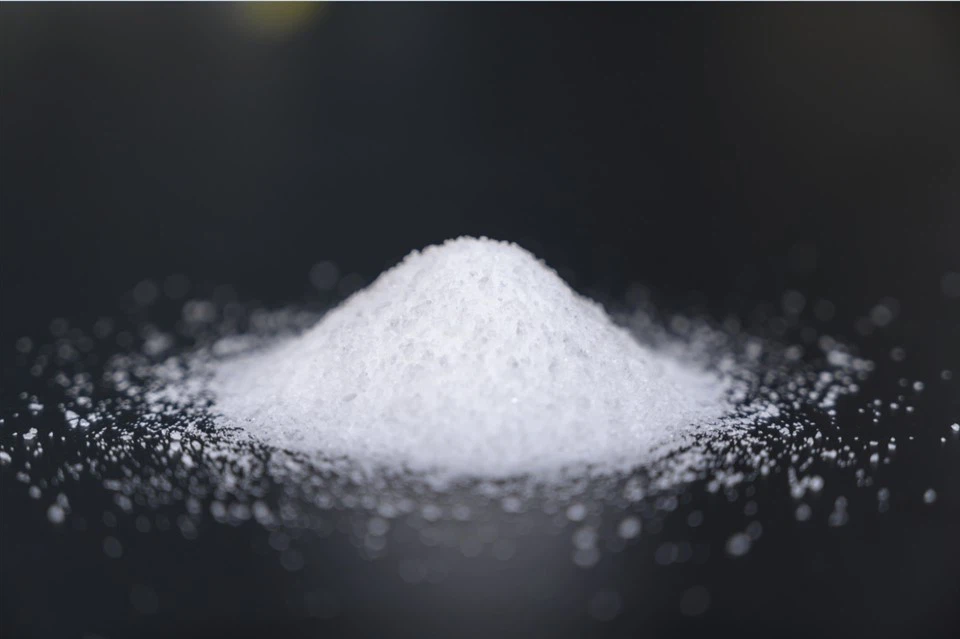
First off, let's understand what acrylamide crystal is. Acrylamide is a white, odorless, crystalline solid. It's widely used in various industries, like in the production of Acrylamide for Dyes, Paints. It's also available in different purities, such as Acrylamide 98%. You can check out our Acrylamide Crystal product page for more details.
Now, back to our main question. The short answer is yes, acrylamide crystal can form complexes with other compounds. But to really get it, we need to look at the science behind it.
Acrylamide has a reactive double - bond and an amide group in its structure. These functional groups are the key players when it comes to complex formation. The double - bond can undergo addition reactions, and the amide group can participate in hydrogen bonding and other intermolecular interactions.
Let's start with metal complexes. Acrylamide can form complexes with metal ions. For example, transition metals like copper, nickel, and zinc. The amide group in acrylamide can act as a ligand, donating a pair of electrons to the metal ion. This forms a coordination complex. The metal ion sits at the center, surrounded by acrylamide molecules. The stability of these complexes depends on a few factors, like the charge and size of the metal ion, and the number of acrylamide molecules that can bind to it.
In the case of copper(II) ions, acrylamide can form a complex where the copper ion is coordinated to the oxygen and nitrogen atoms of the amide group. This complex has unique properties compared to the individual components. It might have different solubility, color, or reactivity. These metal - acrylamide complexes can be used in catalysis. They can speed up chemical reactions in a more efficient and selective way.
Another type of complex formation is with organic compounds. Acrylamide can form complexes with other organic molecules through hydrogen bonding. For instance, if there are other molecules with hydroxyl (-OH) or amino (-NH₂) groups, they can form hydrogen bonds with the amide group of acrylamide. This can lead to the formation of supramolecular structures.
Supramolecular chemistry is all about non - covalent interactions between molecules. In the case of acrylamide and other organic compounds, these non - covalent interactions can result in the formation of aggregates or even organized structures like gels. These gels can have interesting mechanical and rheological properties. They can be used in drug delivery systems. The drug can be encapsulated within the gel matrix, and then released in a controlled manner.
The conditions under which acrylamide forms complexes are also important. Temperature, pH, and the concentration of the reactants all play a role. For example, at higher temperatures, the kinetic energy of the molecules increases. This can make it easier for the acrylamide and the other compound to come into contact and form a complex. But if the temperature is too high, the complex might break apart.
pH is also crucial. In acidic or basic conditions, the functional groups in acrylamide and the other compound can be protonated or deprotonated. This can change their reactivity and the ability to form complexes. For example, in a basic solution, the amide group in acrylamide might be deprotonated, which can affect its ability to act as a ligand in metal complex formation.
The concentration of the reactants matters too. If there's a high concentration of acrylamide and the other compound, there's a higher probability of them colliding and forming a complex. But if the concentration is too high, it might lead to the formation of large aggregates or precipitates, which can be a problem in some applications.
In the industrial world, these complex - forming abilities of acrylamide are really valuable. In the water treatment industry, acrylamide - based polymers can form complexes with impurities in water. These impurities can be metal ions or organic pollutants. The polymer - impurity complex can then be removed from the water through filtration or sedimentation.
In the food industry, acrylamide is formed during the cooking of starchy foods at high temperatures. It can form complexes with other food components. For example, it can interact with proteins in the food. These interactions can affect the taste, texture, and nutritional value of the food. Scientists are still studying these food - related acrylamide complexes to understand their impact on human health.
As a supplier of Acrylamide Crystal, I know that these complex - forming properties open up a lot of opportunities for our customers. Whether you're in the research field, looking for new materials, or in an industrial process, acrylamide's ability to form complexes can be a game - changer.
If you're interested in using acrylamide crystal for complex formation in your projects, we're here to help. We can provide high - quality Acrylamide Crystal that meets your specific requirements. Whether you need a small quantity for research or a large amount for industrial production, we've got you covered.
If you want to learn more about our products or have any questions about acrylamide complex formation, don't hesitate to reach out. We can have a chat about your needs and how acrylamide can fit into your processes.
So, in conclusion, acrylamide crystal can definitely form complexes with other compounds. Its unique structure and reactivity make it a versatile chemical. Whether it's metal complexes, organic complexes, or supramolecular structures, acrylamide has a lot to offer. And as a supplier, we're excited to be part of your journey in exploring these complex - forming possibilities.
If you're interested in purchasing acrylamide crystal or discussing potential applications, feel free to get in touch. We're looking forward to having a fruitful conversation with you and helping you with your procurement needs.
References
- Atkins, P., & de Paula, J. (2014). Physical Chemistry. Oxford University Press.
- Housecroft, C. E., & Sharpe, A. G. (2012). Inorganic Chemistry. Pearson.
- Smith, M. B., & March, J. (2007). March's Advanced Organic Chemistry: Reactions, Mechanisms, and Structure. John Wiley & Sons.


