


In the realm of industrial wastewater treatment, the challenge of dealing with high - calcium - content wastewater is both complex and pressing. As a dedicated supplier of Polyacrylamide for Industrial Wastewater Treatment, I have witnessed firsthand the in - depth discussions and experiments surrounding the application of polyacrylamide in this specific wastewater treatment scenario.
High - calcium - content industrial wastewater is generated from a multitude of industries. For instance, the mining, construction, and some chemical manufacturing industries often produce effluents rich in calcium ions. The high concentration of calcium can cause significant difficulties in wastewater treatment processes. Calcium ions can react with various substances in the wastewater, leading to the formation of hard - to - handle precipitates and scaling, which can clog pipes, reduce the efficiency of filtration systems, and ultimately affect the overall treatment performance.
Polyacrylamide, a well - known polymer, has long been utilized in industrial wastewater treatment. Its ability to form large flocs by bridging and aggregating suspended particles makes it an indispensable tool for clarification and solid - liquid separation processes. There are different types of polyacrylamide, including cationic, anionic, and non - ionic, each with its own unique properties and application scopes.
When it comes to high - calcium - content wastewater, the question of whether polyacrylamide can be effectively used hinges on several factors. Firstly, the chemical properties of calcium ions need to be considered. Calcium is a divalent cation, and its presence can interact with the charged groups on the polyacrylamide molecules. For anionic polyacrylamide, which has negatively charged functional groups, calcium ions can potentially form cross - links between the polymer chains. This cross - linking can enhance the flocculation ability to some extent, as it promotes the formation of larger and more compact flocs. However, if the calcium concentration is extremely high, excessive cross - linking may lead to the formation of a gel - like structure, which can be difficult to separate from the water phase and may even cause the flocs to become too large and break apart easily.
On the other hand, cationic polyacrylamide, with its positively charged groups, will have a different interaction with calcium ions. Since calcium is also positively charged, there may be electrostatic repulsion between them. In some cases, this can reduce the effectiveness of cationic polyacrylamide in binding with negatively charged suspended particles in the wastewater. However, in certain complex wastewater systems where other factors come into play, the overall impact may not be straightforward, and careful experimentation is required to determine the optimal dosage and type of polyacrylamide.

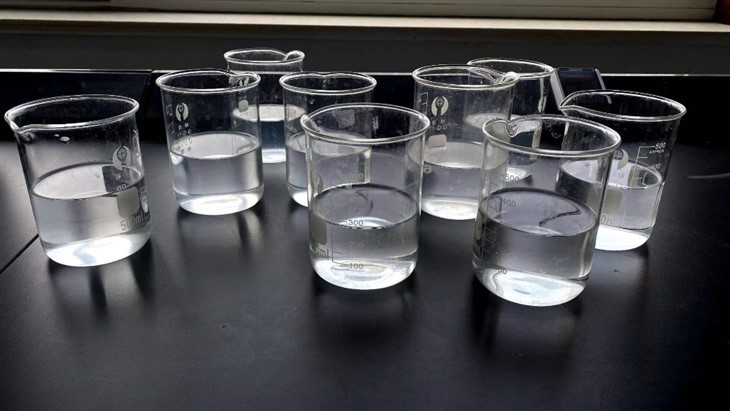
Non - ionic polyacrylamide, which lacks significant charged groups, may have relatively less direct interaction with calcium ions. It mainly relies on physical entanglement and hydrogen - bonding forces to form flocs. In high - calcium - content wastewater, non - ionic polyacrylamide can still play a role in flocculating fine particles, but its performance may be affected by the presence of other substances in the wastewater that interact with calcium and the polymer.
To better understand the practical application of polyacrylamide in high - calcium - content wastewater treatment, we can look at some case studies. In a mining operation, the wastewater contains a high concentration of calcium due to the dissolution of limestone and other calcium - rich minerals during the extraction process. By using an appropriate type and dosage of anionic polyacrylamide, the suspended solids in the wastewater can be effectively flocculated and settled. The calcium ions in the wastewater actually contribute to the strengthening of the flocculant structure, resulting in faster sedimentation rates and clearer supernatant. However, in a chemical manufacturing plant where the high - calcium - content wastewater also contains a large amount of other complex organic compounds, the performance of polyacrylamide may be more complex. The organic compounds can compete with the polyacrylamide for binding sites on the suspended particles, and the calcium ions may interact with these organics, further complicating the flocculation process.
In addition to the type of polyacrylamide, the dosage is also a critical factor. An improper dosage can lead to either insufficient flocculation or the formation of excessive flocs that are difficult to handle. In high - calcium - content wastewater, the optimal dosage may need to be adjusted based on the calcium concentration and the characteristics of other components in the wastewater. Laboratory - scale tests are often conducted to determine the most suitable dosage range.
Another important aspect is the pH of the wastewater. The solubility and reactivity of calcium compounds are highly pH - dependent. In a slightly alkaline environment, calcium carbonate may precipitate, which can affect the interaction between polyacrylamide and the suspended particles. Adjusting the pH to an appropriate range can optimize the flocculation performance of polyacrylamide. For anionic polyacrylamide, a slightly alkaline pH is generally favorable for the ionization of the functional groups and the formation of effective flocs.
In the field of industrial wastewater treatment, polyacrylamide has a wide range of applications beyond high - calcium - content wastewater. For example, Polyacrylamide for Dyeing Wastewater is specifically designed to deal with the complex colorants and impurities in dyeing industry effluents. In the sand - washing industry, Polyacrylamide for Sand Washing helps to separate the fine sand particles from the washing water, improving the water quality and facilitating the recycling of water. And Anionic Polyacrylamide is widely used in many industrial sectors for its excellent flocculation performance in different types of wastewater.
In conclusion, polyacrylamide can be used in the treatment of high - calcium - content industrial wastewater, but it requires a comprehensive understanding of the wastewater characteristics, including the calcium concentration, the presence of other substances, the pH value, etc. Through careful selection of the type and dosage of polyacrylamide, and by optimizing the treatment process conditions, effective flocculation and solid - liquid separation can be achieved.
If you are facing challenges in treating high - calcium - content industrial wastewater or any other type of industrial wastewater, and are interested in exploring the potential of polyacrylamide in your treatment processes, please feel free to contact us for further discussions and procurement. We are committed to providing high - quality polyacrylamide products and professional technical support to meet your specific needs.
References
- Smith, J. (2018). Industrial Wastewater Treatment Technologies. Elsevier.
- Johnson, A. (2020). Polyacrylamide Applications in Water and Wastewater Treatment. CRC Press.
- Brown, C. (2021). The Impact of Calcium Ions on Flocculation Processes. Journal of Environmental Science and Technology.


