


The pH level plays a crucial role in the properties of acrylamide - based synthetic polymers. As a supplier of Acrylamide for Synthetic Polymer, I have witnessed firsthand how the characteristics of our products can be significantly influenced by the pH of their environment. In this blog, I'll delve into the various effects of pH on these polymers, explore their practical implications in different industries, and touch on how we at our company strive to meet the diverse needs of our clients.
Molecular Structure and pH
To understand the effects of pH on acrylamide - based synthetic polymers, we first need to look at their molecular structure. Acrylamide monomers have an amide functional group (-CONH₂). When these monomers polymerize, they form long - chain polymers. The pH of the solution can cause changes in the ionization state of the amide group and other functional groups that may be present in co - polymers or modified acrylamide polymers.
At low pH values (acidic conditions), the amide group can undergo protonation. Protonation of the carbonyl oxygen in the amide group can lead to a change in the electron density around the polymer chain. This can disrupt the hydrogen - bonding interactions that often contribute to the stability and conformation of the polymer. As a result, the polymer may become more flexible and less likely to form ordered structures. For example, in an acidic solution, the intramolecular hydrogen bonds within the acrylamide polymer chains may break, causing the chains to coil more loosely.
In contrast, at high pH values (basic conditions), the amide group can be hydrolyzed. Hydrolysis of the amide bond cleaves the polymer chain, leading to a decrease in the molecular weight of the polymer. This degradation can have a dramatic impact on the physical and chemical properties of the polymer. For instance, as the molecular weight decreases, the viscosity of the polymer solution typically drops significantly.
Solubility and pH
The solubility of acrylamide - based synthetic polymers is also strongly affected by pH. These polymers are generally more soluble in water due to the presence of polar amide groups that can interact with water molecules through hydrogen bonding. However, pH changes can alter this solubility behavior.
Under acidic conditions, the protonation of the amide group can increase the hydrophilicity of the polymer. The positively charged sites on the polymer chain can interact more effectively with water molecules, enhancing solubility. This can be advantageous in applications where a highly soluble polymer is required, such as in some water - based paint formulations. Our Acrylamide for Dyes, Paints products can benefit from pH - adjusted solubility to ensure better dispersion in the paint matrix and improved coating quality.
On the other hand, at high pH, hydrolysis of the amide group can lead to the formation of carboxylic acid groups if the reaction progresses. These carboxylic acid groups can ionize in basic solutions, and the resulting negatively charged polymer can either become more soluble (if the charge repulsion between the polymer chains overcomes the hydrophobic interactions) or form aggregates. Aggregation can occur when the electrostatic repulsion is balanced by other forces such as van der Waals forces, leading to a decrease in solubility.
Rheological Properties and pH
Rheological properties, such as viscosity and elasticity, are of great importance in many applications of acrylamide - based synthetic polymers. The pH of the system can have a profound impact on these properties.
As mentioned earlier, at low pH, the protonation of the amide groups can increase the flexibility of the polymer chains. This increased flexibility often leads to a decrease in the viscosity of the polymer solution. Lower - viscosity solutions can flow more easily, which is beneficial in applications such as inks and some adhesive formulations. Our Acrylamide for Glass Fiber Adhesive can be tailored to achieve the desired viscosity through pH adjustment, ensuring proper application and bonding strength.
At high pH, the hydrolysis of the amide bonds and the resulting reduction in molecular weight also cause a decrease in viscosity. However, if the polymer forms aggregates due to the ionization of the newly formed carboxylic acid groups, the viscosity may increase again. This complex relationship between pH and rheology requires careful control in industrial processes to achieve the optimal flow and handling properties of the polymer.
Application - Specific Effects
Acrylamide - based synthetic polymers are widely used in various industries, and the effects of pH can be critical in determining their performance.
In the water treatment industry, these polymers are often used as flocculants. The pH of the water can affect the adsorption of the polymer on the surface of suspended particles and the formation of flocs. In acidic water, the protonated polymer chains may interact differently with the charged particles compared to basic conditions. By adjusting the pH of the water during the treatment process, we can optimize the flocculation efficiency and improve the removal of contaminants.
In the oil and gas industry, acrylamide - based polymers are used as drilling fluids additives. The pH of the drilling fluid can influence the polymer's ability to carry cuttings, control fluid loss, and maintain the stability of the wellbore. At the right pH, the polymer can form a stable gel - like structure that provides good suspension and filtration properties.
Our Role as a Supplier
As a supplier of Acrylamide for Synthetic Polymer, we understand the importance of pH - related effects on our products. We offer high - quality acrylamide materials and provide technical support to our customers on how to manage the pH of their systems. Our research and development team is constantly working on developing polymers that can perform well under a wide range of pH conditions.

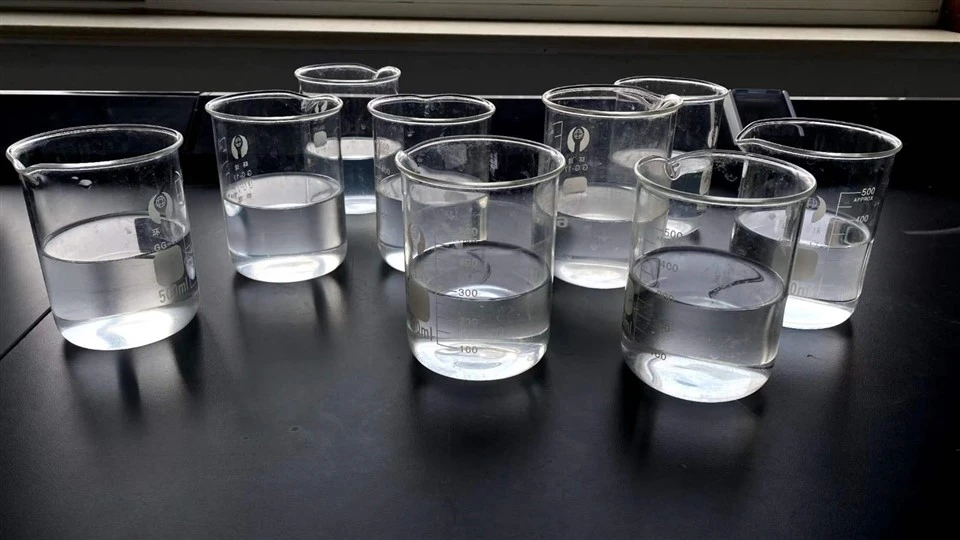
We conduct in - depth laboratory studies to understand the behavior of our polymers at different pH levels. This enables us to provide accurate product recommendations based on our customers' specific application requirements. Whether it's a paint manufacturer looking for a polymer with optimal solubility in acidic conditions or an oilfield service company needing a drilling fluid additive that is pH - stable, we are committed to delivering the best solutions.
Contact Us for Purchase and Consultation
If you are in an industry that utilizes acrylamide - based synthetic polymers and are interested in exploring how pH can be optimized for your processes, or if you have any questions about our products, we invite you to reach out. We are eager to engage in discussions with you to understand your needs and provide the most suitable acrylamide solutions. Our team of experts is ready to assist you in making informed decisions regarding your polymer requirements.
References
- Albert A. Martell, Melvin Calvin, Chemistry of the metal chelate compounds, 1952.
- M. H. Abraham, “Hydrogen bonding. Part 34. The factors that influence the solubility of gases and vapours in water at 298 K, and a new method for its determination,” J. Chem. Soc., Perkin Trans. 2, 1993.
- F. Heatley, “The solution properties of acrylamide polymers,” Advances in Colloid and Interface Science, 1982.


