


As a Polyacrylamide Powder supplier, I often encounter customers who express concerns about the chemical composition of Polyacrylamide Powder. This curiosity is well - founded, considering the wide range of applications of this product, from Polyacrylamide for Dyeing Wastewater and Anionic Polyacrylamide to Polyacrylamide for Industrial Wastewater Treatment. Understanding the chemical composition is crucial for ensuring its effectiveness and safety in various processes. In this blog, I will guide you through the process of analyzing the chemical composition of Polyacrylamide Powder.
Understanding the Basics of Polyacrylamide
Polyacrylamide (PAM) is a polymer formed from acrylamide subunits. It is a water - soluble polymer with the general formula - [CH₂CH(CONH₂)]ₙ-. The physical form of polyacrylamide we deal with is the powder, which is stable under normal conditions but can react under specific circumstances. Different types of polyacrylamide have different properties based on factors such as molecular weight and charge density.
Sample Preparation
Before analyzing the chemical composition of polyacrylamide powder, proper sample preparation is essential. First, obtain a representative sample from the bulk of the powder. Due to possible variations in different parts of the product, randomly select multiple small samples from different locations within the container and then mix them thoroughly. This ensures that the sample analyzed accurately reflects the overall chemical composition of the entire batch.
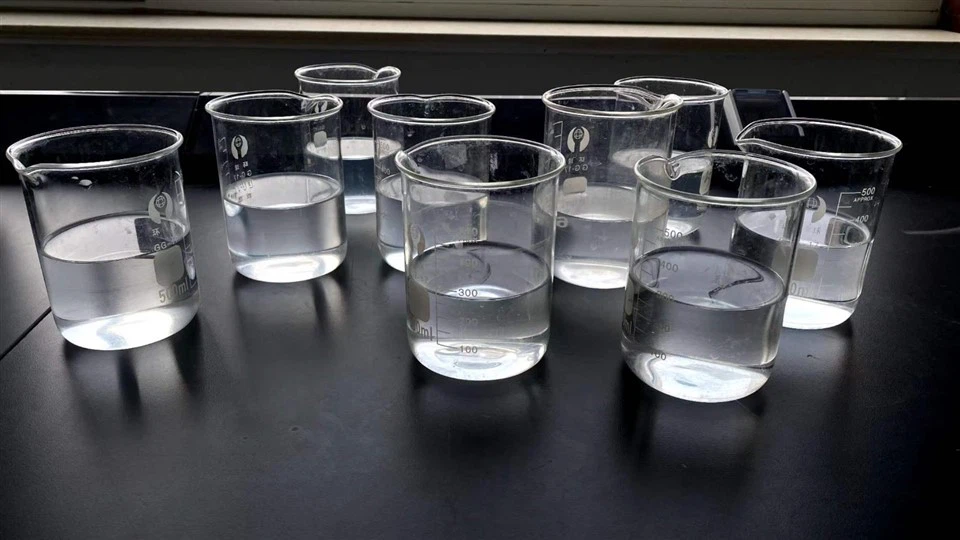
Weigh out a specific amount of the mixed sample. Usually, a sample of about 0.5 - 1 gram is sufficient for most analysis methods. Transfer the weighed sample into a clean beaker. Add distilled water to dissolve the polyacrylamide powder. Stir gently with a glass rod until the powder is completely dissolved. The concentration of the solution should be carefully controlled; a 1% - 2% solution is often a good starting point for subsequent analyses.
Elemental Analysis
One of the fundamental steps in analyzing polyacrylamide powder is elemental analysis. This method helps to determine the types and proportions of elements present in the compound. The main elements in polyacrylamide are carbon (C), hydrogen (H), nitrogen (N), and oxygen (O).
Combustion Analysis
Combustion analysis is a common method for determining the carbon, hydrogen, and nitrogen content. In this method, a small, accurately weighed sample of the polyacrylamide solution is placed in a combustion chamber. The chamber is then filled with an excess of oxygen and ignited. During combustion, carbon in the polyacrylamide is converted to carbon dioxide (CO₂), hydrogen to water (H₂O), and nitrogen is often converted to nitrogen oxides, which are further reduced to nitrogen gas.
The produced CO₂ and H₂O are then trapped and measured. By analyzing the mass of the trapped CO₂ and H₂O, the amount of carbon and hydrogen in the original sample can be calculated. For nitrogen, various techniques such as the Kjeldahl method or the Dumas method can be used. The Kjeldahl method involves digesting the sample with concentrated sulfuric acid to convert nitrogen into ammonium sulfate. The ammonium ions are then distilled and titrated to determine the nitrogen content.
Oxygen Analysis
Determining the oxygen content in polyacrylamide can be more challenging. One approach is to use the difference method. After determining the carbon, hydrogen, and nitrogen content, the oxygen content can be estimated by subtracting the sum of the masses of these elements from the total mass of the sample, assuming that the sample only contains C, H, N, and O. However, more accurate methods such as pyrolysis - gas chromatography - mass spectrometry (Py - GC - MS) can also be employed. In Py - GC - MS, the sample is pyrolyzed at high temperatures, and the resulting gaseous products are separated by gas chromatography and identified by mass spectrometry.
Functional Group Analysis
Polyacrylamide contains amide functional groups (-CONH₂). Infrared (IR) spectroscopy is an effective method for identifying these functional groups.
Infrared Spectroscopy
In IR spectroscopy, the sample (usually in the form of a thin film on a salt plate or as a KBr pellet) is exposed to infrared radiation. Different functional groups absorb infrared radiation at characteristic frequencies. The amide group in polyacrylamide shows characteristic absorption bands in the IR spectrum.
The carbon - oxygen double bond (C = O) in the amide group typically absorbs around 1630 - 1690 cm⁻¹, and the N - H stretching vibration gives rise to absorption bands around 3100 - 3500 cm⁻¹. By comparing the obtained IR spectrum with standard spectra of polyacrylamide, the presence and integrity of the amide functional groups can be confirmed.
Nuclear Magnetic Resonance (NMR) Spectroscopy
NMR spectroscopy is another powerful tool for analyzing the chemical structure of polyacrylamide. ¹H NMR and ¹³C NMR can provide detailed information about the chemical environment of hydrogen and carbon atoms in the polymer.
In ¹H NMR, the protons in different chemical environments in the polyacrylamide molecule resonate at different frequencies. For example, the protons on the CH₂ and CH groups in the polymer backbone and the protons on the amide group will have distinct chemical shifts. By analyzing the splitting patterns and integration values of the peaks in the ¹H NMR spectrum, information about the connectivity and the number of protons in different groups can be obtained.
¹³C NMR provides information about the carbon atoms in the molecule. Different carbon atoms, such as those in the polymer backbone and the carbonyl carbon in the amide group, have characteristic chemical shifts. This helps in confirming the chemical structure of polyacrylamide and detecting any impurities or side - reaction products.
Molecular Weight and Distribution Analysis
The molecular weight of polyacrylamide is an important parameter as it affects its performance in various applications. Gel permeation chromatography (GPC), also known as size - exclusion chromatography (SEC), is commonly used to determine the molecular weight and molecular weight distribution of polyacrylamide.
In GPC, the polyacrylamide solution is injected into a column filled with porous beads. Smaller polymer molecules can enter the pores of the beads, while larger molecules pass through the column more quickly. As the sample elutes from the column, the concentration of the polymer in the eluent is measured continuously. By comparing the elution time with standards of known molecular weight, the molecular weight of the polyacrylamide sample can be determined.
The molecular weight distribution is characterized by parameters such as the number - average molecular weight (Mn), weight - average molecular weight (Mw), and the polydispersity index (PDI = Mw/Mn). A narrow PDI indicates a more uniform molecular weight distribution, which is often desirable in many applications.

Significance of Analysis Results
The results of the chemical composition analysis of polyacrylamide powder are of great significance. For customers in the wastewater treatment industry, understanding the elemental composition, functional group integrity, and molecular weight of polyacrylamide can help them select the most suitable product for their specific needs.
If the analysis shows that the polyacrylamide has a high molecular weight and a proper charge density, it may be more effective in flocculating and coagulating suspended particles in industrial wastewater. On the other hand, for applications in the dyeing industry, the purity and chemical stability of polyacrylamide are crucial for ensuring the quality of the dyeing process.
Conclusion
Analyzing the chemical composition of polyacrylamide powder is a multi - step process that requires a combination of different analytical techniques. From elemental analysis to functional group identification and molecular weight determination, each step provides valuable information about the product's properties.
As a Polyacrylamide Powder supplier, we are committed to providing high - quality products. We conduct comprehensive chemical composition analyses on our products to ensure they meet the strictest quality standards. If you are interested in our polyacrylamide products or have any questions about their chemical composition, we welcome you to contact us for further details and to discuss your specific requirements for procurement.
References
- Skoog, D. A., West, D. M., Holler, F. J., & Crouch, S. R. (2013). Fundamentals of Analytical Chemistry. Cengage Learning.
- Hiemenz, P. C., & Rajagopalan, R. (1997). Polymers and Surfaces. Marcel Dekker.
- Albertsson, A. C. (1986). Partition of Cell Particles and Macromolecules. Wiley - Interscience.


